 gamblingwebsitesuk.com
 Available in US
Responsible Gambling UK: Player Support and Safety Tools
Contents
Responsible Gambling Tools on UK Betting Platforms
The UK’s responsible gambling framework exists because entertainment and harm share the same mechanics. The slot that gives you a rush when you hit a bonus round uses the same variable-ratio reinforcement schedule that makes the game difficult to walk away from when you’re losing. The in-play bet that feels thrilling at 2-1 down operates the same impulsive decision pathways that drive chasing behaviour. The features that make gambling exciting are not separate from the features that make it risky — they are the same features, experienced differently depending on the player, the context, and the stakes involved.
This is why responsible gambling isn’t a footnote on UK gambling sites. It’s a structural component of the regulatory framework, mandated by law, enforced by the UKGC, and embedded in every licensed operator’s obligations. The tools exist — deposit limits, session timers, cooling-off periods, self-exclusion — and they work when they’re used. The support infrastructure exists too — GamStop, GamCare, the National Gambling Helpline, and NHS treatment services. But between the existence of these tools and their effective use sits a gap that regulation alone cannot close: the gap between knowing the tools are there and actually reaching for them when they’re needed.
This article covers the responsible gambling landscape in the UK comprehensively. We’ll walk through every mandatory tool that UKGC-licensed sites must provide, explain how GamStop works as a national self-exclusion mechanism, unpack the affordability check system, address how to recognise problem gambling and where to find help, and examine how operators are held accountable when they fail their social responsibility obligations. The tone is practical, not preachy. The goal is to make sure you know what’s available, how it works, and how to use it if you ever need to.
Players who feel they are losing control can utilize the national self-exclusion scheme, but first, you should learn exactly how GamStop works and what it blocks.
Mandatory Tools on Every UKGC-Licensed Site
Deposit and Loss Limits
Deposit limits, session timers, cooling-off periods, self-exclusion — these aren’t optional extras. Every UKGC-licensed gambling site must offer them, and every player has the right to use them at any time, without explanation, without penalty, and without the operator attempting to discourage their use.
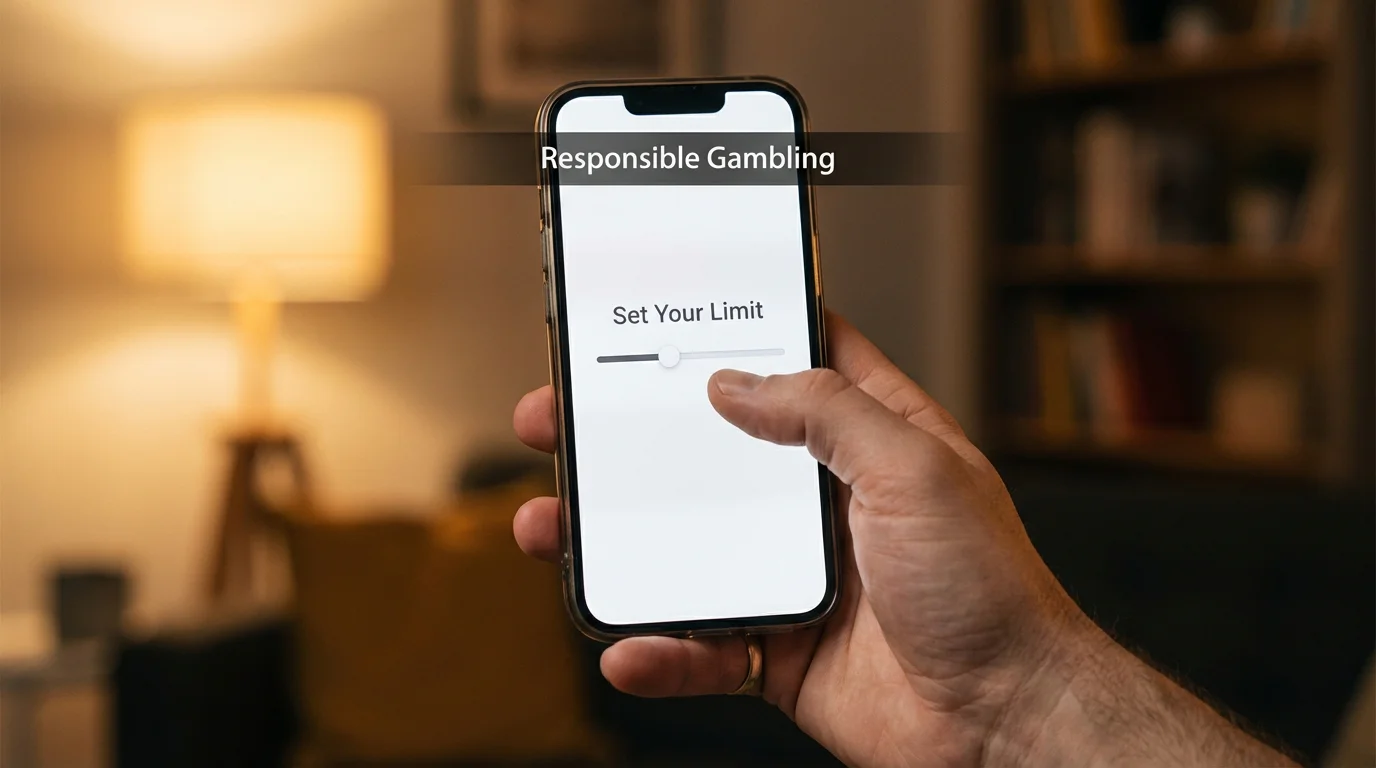
Deposit limits are the most straightforward tool. You set a maximum amount that you can deposit within a given period — daily, weekly, or monthly — and the operator’s system prevents you from exceeding that limit. Once set, a reduction takes effect immediately. An increase, however, is subject to a cooling-off period — typically 24 hours — before it becomes active. This asymmetry is deliberate: it’s designed to prevent impulsive increases during a losing session, when the urge to deposit more is strongest and the decision to do so is least likely to be rational.
Loss limits operate on a similar principle but measure net losses rather than deposits. You set a maximum amount you’re prepared to lose within a period, and the system restricts your activity once that threshold is reached. Not all operators offer loss limits as a separate feature from deposit limits, but the UKGC has encouraged their adoption as a more accurate measure of gambling expenditure — because deposits and losses aren’t the same thing. A player who deposits a hundred pounds and wins fifty has deposited a hundred but lost nothing. Loss limits capture the metric that actually matters to financial wellbeing.
The practical value of these limits depends entirely on whether you set them. Many players register on a site and skip the limit-setting step, intending to manage their spending manually. Manual management works for some. For others, particularly in the heat of a session, the absence of an external constraint means the only brake on spending is willpower — and willpower is a depletable resource, especially in an environment engineered to sustain engagement.
Session Limits and Reality Checks
Session limits and reality checks address time rather than money, and they tackle one of the subtler mechanisms of gambling harm: the loss of temporal awareness. Online gambling has no closing time. There’s no croupier announcing last bets, no bar calling last orders, no natural break between one session and the next. The games are available twenty-four hours a day, and without an external prompt, hours can pass without the player registering how long they’ve been playing.
Reality checks are pop-up notifications that appear at set intervals — every thirty minutes, every hour, or at whatever interval the player specifies. They typically display how long you’ve been playing and your net position (total deposited, total wagered, net win or loss). The notification pauses the game and requires acknowledgement before play continues. Some operators offer enhanced reality checks that include additional data, such as session duration compared to your average, or a prompt asking whether you’d like to set or adjust a deposit limit.
Session limits go further by automatically ending your playing session after a specified duration. If you set a two-hour session limit, the system logs you out after two hours and prevents you from logging back in for a cooling-off period. This is a harder intervention than a reality check — it doesn’t ask whether you’d like to continue; it stops you — and it’s particularly useful for players who know they tend to lose track of time during extended sessions.
Cooling-Off and Self-Exclusion
Cooling-off periods and self-exclusion escalate the level of intervention. A cooling-off period — sometimes called a “take a break” feature — suspends your account for a short, defined period, typically 24 hours, 48 hours, one week, or one month. During the cooling-off period, you cannot log in, deposit, or gamble. Some operators also suppress marketing communications during the period, though compliance on this point varies.
Self-exclusion at the operator level is a longer-term commitment. You can self-exclude from a specific gambling site for a minimum of six months, during which the operator must close your account, return any balance, and take reasonable steps to prevent you from opening a new account. Self-exclusion is not a casual feature — once activated, it cannot be reversed during the exclusion period, and the operator is prohibited from contacting you with marketing or re-engagement offers.
The progression from deposit limits to session limits to cooling-off to self-exclusion represents a spectrum of intervention intensity, and the system is designed so that each step is available before you need it. The player who sets a deposit limit today and finds they’re consistently hitting it may graduate to a session limit. The player who takes repeated cooling-off breaks may recognise that a longer self-exclusion is appropriate. The tools are layered precisely because harm isn’t binary — it develops along a continuum, and the response should be proportional.
GamStop: The National Self-Exclusion Scheme
GamStop is a single registration that blocks you from every UKGC-licensed gambling site simultaneously. Where operator-level self-exclusion locks you out of one site, GamStop locks you out of all of them. It’s the most comprehensive self-exclusion tool available to UK gamblers, and it’s free, voluntary, and accessible to anyone with a UK address.
Registration is straightforward. You visit the GamStop website, provide your personal details — name, date of birth, address, email, and phone number — and choose an exclusion period: six months, one year, or five years. Once registered, every UKGC-licensed online gambling operator must block you from accessing their site, creating a new account, or receiving marketing communications. The block typically takes effect within 24 hours, though some operators implement it more quickly.
The mechanics rely on data matching. GamStop shares your registration details with all participating operators, who are required to cross-reference new and existing accounts against the GamStop database. If a match is found, the account is closed or the registration is blocked. This works well when the data matches cleanly — same name, same address, same email. It’s less robust when players use variations of their details, alternative addresses, or new email accounts. GamStop acknowledges these limitations and continues to improve its matching algorithms, but no data-matching system is infallible, and determined individuals can sometimes circumvent the block.
What GamStop doesn’t cover is important to understand. It applies only to UKGC-licensed remote gambling operators. Land-based casinos, betting shops, and bingo halls are covered by separate self-exclusion schemes (Multi-Operator Self-Exclusion Scheme, or MOSES, for betting shops; bingo and the casino industry each have their own arrangements). The National Lottery is excluded from GamStop entirely. And offshore gambling sites — those operating without a UKGC licence — are not part of the scheme and cannot be compelled to participate. If an individual is in crisis, GamStop removes the most accessible routes to gambling, but it doesn’t eliminate all of them.
Operator compliance with GamStop is a licence condition, not a voluntary commitment. UKGC-licensed operators must integrate with the GamStop system, check all new registrations against the database, and regularly screen existing accounts for matches. Failure to do so constitutes a licence breach. The UKGC has taken enforcement action against operators that allowed GamStop-registered individuals to continue gambling, and these cases are treated seriously — they represent a failure in the most fundamental player protection mechanism available.
Once your chosen exclusion period ends, your accounts do not automatically reopen. You must actively contact GamStop and confirm that you wish to be removed from the register. There is then a further 24-hour cooling-off period before the removal takes effect, providing one final pause for reconsideration. This friction is intentional — the system is designed to make returning to gambling a deliberate choice rather than an impulsive one.
For anyone considering GamStop, the threshold should be low. If you’re wondering whether you need it, the wondering itself may be significant. Registration costs nothing, requires no justification, and can be completed in minutes. The six-month minimum allows time for perspective. And if you reach the end of your exclusion period and decide gambling is something you can engage with healthily, the option to return is there. But the door stays closed until you explicitly choose to open it.
Affordability Checks and Financial Risk Assessments
The idea is straightforward: if someone can’t afford to lose it, they shouldn’t be staking it. The implementation is considerably more complex. Affordability checks — formally known as financial risk assessments — are now a mandatory part of the UK gambling regulatory framework, requiring operators to assess whether a customer’s gambling expenditure is sustainable relative to their financial circumstances.
The checks operate on a tiered basis. At lower spending levels, operators rely on light-touch assessments: automated data checks using credit reference agencies and Open Banking data to build a rough picture of the customer’s financial situation. These checks happen in the background and are invisible to most players. If the data raises no concerns, the player continues without interruption. If indicators suggest potential risk — high spending relative to estimated income, patterns associated with financial distress, or rapidly increasing deposit frequency — the operator escalates to a more detailed assessment.
Enhanced checks are where the friction becomes visible. The operator may contact the player directly, requesting documents: bank statements, payslips, tax returns, or other evidence of income and expenditure. Until the check is resolved, the player’s account may be restricted — deposit limits imposed, account suspended, or withdrawal-only mode activated. The process can take days, sometimes longer, and for the player on the receiving end, it can feel intrusive, patronising, or punitive, depending on their circumstances and perspective.
The controversy around affordability checks centres on proportionality. Critics argue that the thresholds are too low, catching players who are gambling well within their means and subjecting them to documentation requirements that feel disproportionate to the risk. Others counter that the entire point of the system is to catch potential harm before it becomes actual harm, and that some false positives are an acceptable cost of protecting those who genuinely need intervention. The UKGC has adjusted the framework multiple times, trying to find a calibration that satisfies both concerns, and the process remains iterative.
From the player’s perspective, the practical advice is straightforward. If you’re asked for documentation, provide it promptly — the faster you respond, the faster the check is resolved. Keep in mind that the request isn’t personal; it’s a regulatory requirement applied to all players who cross certain thresholds. And if you believe the check has been applied unfairly, the operator must have a complaints process, and the UKGC will investigate cases where operators misapply the rules. The system isn’t perfect, but it’s not arbitrary either — and understanding why it exists makes the experience less confrontational when it touches you directly.
Open Banking is increasingly central to how affordability checks are conducted. Rather than requesting physical documents, some operators can — with the player’s consent — access a read-only view of bank transaction data through Open Banking APIs. This allows a faster, less intrusive assessment: the system analyses income and spending patterns algorithmically, reaching a conclusion in minutes rather than the days required for manual document review. For the player, it means consenting to a data check rather than photographing payslips. For the operator, it means faster resolution and fewer abandoned accounts. The technology doesn’t eliminate the friction entirely, but it compresses it into a less disruptive process — and as adoption increases, it’s likely to become the standard method for affordability assessment across the industry.
Recognising Problem Gambling
Warning Signs
Problem gambling rarely announces itself. It accumulates. The shift from recreational gambling to problematic gambling is usually gradual, and the person experiencing it is often the last to recognise what’s happening. That’s not a character failing — it’s a feature of how gambling-related harm develops, through small escalations that individually seem unremarkable but collectively represent a significant change in behaviour and wellbeing.
Certain patterns warrant honest self-assessment. Spending more than you intended — not once, but repeatedly — is one of the earliest indicators. Chasing losses — increasing bets or extending sessions specifically to recover money you’ve lost — is another. Borrowing money to gamble, whether from friends, family, or credit products, crosses a clear line. Gambling to escape stress, boredom, or emotional pain rather than for entertainment shifts the function of gambling from leisure to coping mechanism, which is a fundamentally different and more dangerous relationship.
There are subtler signs too. Concealing gambling activity from people close to you suggests an awareness that the behaviour has moved beyond what you’d comfortably defend. Feeling restless or irritable when not gambling, or when trying to cut back, indicates a dependency pattern. Neglecting responsibilities — work, relationships, health — in favour of gambling time reflects a priority shift that recreational gambling doesn’t typically produce. And the persistent belief that a big win will solve the problems that gambling has created is the hallmark of the cycle that problem gambling sustains.
None of these signs in isolation means someone is a problem gambler. Everyone has occasionally spent more than intended or stayed up later than planned. The distinction is pattern and persistence. If several of these indicators apply, if they’re worsening over time, and if gambling is affecting areas of life beyond the activity itself, then the situation merits attention — not panic, but honest, clear-eyed attention.
How to Get Help: UK Resources
The UK has one of the most developed support infrastructures for gambling harm in the world. If you or someone you know is struggling, there are multiple avenues for help, all free and all confidential.
GamCare is the leading UK provider of information, advice, and support for anyone affected by gambling. Their National Gambling Helpline operates 24 hours a day, every day of the year, and can be reached on 0808 8020 133. The helpline offers immediate support — someone to talk to, advice on next steps, and referrals to specialist treatment where appropriate. GamCare also provides online chat support through their website and runs a network of face-to-face counselling services across Britain.
The NHS offers treatment for gambling addiction through its National Gambling Treatment Service, which provides cognitive behavioural therapy, counselling, and in some cases residential treatment. Referrals can come through a GP, through GamCare, or through the clinic directly. The Northern Gambling Service and the National Gambling Clinic in London are the primary specialist centres, though services have expanded significantly in recent years to improve geographic access.
For those who prefer peer support, Gamblers Anonymous operates groups across the UK, offering a twelve-step programme modelled on the approach used for alcohol addiction. Meetings are free, anonymous, and open to anyone who recognises they have a gambling problem. The organisation also runs Gam-Anon for family members and friends affected by someone else’s gambling.
The message that underpins all of these services is consistent: asking for help is not a failure. It’s the most effective step a person can take. The resources exist precisely for this purpose, and they are used by thousands of people every year — people who were once where you might be now, and who found a path through it.
How Operators Are Held Accountable
The UKGC has issued over 100 million pounds in regulatory penalties since 2018. The majority were for failures in social responsibility — the polite term for operators who failed to protect their customers from gambling harm. The enforcement record makes clear that responsible gambling obligations are not aspirational guidelines. They are enforceable conditions, and operators who breach them face financial and reputational consequences.
The typical failure pattern involves an operator that identified — or should have identified — customers showing signs of harm but failed to intervene effectively. A customer deposits thousands of pounds in a short period, triggers internal alerts, and the operator either ignores the alerts, responds too slowly, or applies an intervention so weak that it has no practical effect. The customer sustains significant losses, complaints are filed, the UKGC investigates, and a regulatory settlement follows — sometimes years after the harm occurred.
The penalties have escalated dramatically. Individual settlements now routinely reach seven or eight figures for the largest operators. Beyond the financial penalty, the UKGC typically imposes additional licence conditions: mandatory procedural improvements, independent audits, enhanced reporting requirements, and sometimes restrictions on marketing or promotional activity until the operator demonstrates compliance. For publicly listed gambling companies, the reputational damage of an enforcement action can affect share prices and investor confidence, creating a secondary deterrent beyond the fine itself.
The UKGC has also moved toward personal accountability. Senior managers holding personal management licences can face individual regulatory action — including licence revocation — if they are found to have been responsible for, or complicit in, an operator’s failures. This shifts the calculus: it’s one thing for a corporate entity to absorb a fine; it’s another for an individual executive to lose their ability to work in the industry.
Whether the enforcement regime is sufficient remains debated. Harm-prevention advocates argue that fines are absorbed as a cost of doing business and that the time lag between failure and sanction blunts the deterrent effect. Industry representatives counter that the current framework is already among the strictest in the world and that further tightening will drive activity to unregulated operators. The truth sits somewhere between — the system is imperfect but functional, and the trajectory is clearly toward stricter accountability, not less.
The System Works Best When Players Use It
Regulation provides the tools. Using them is still a personal decision — and a powerful one. The entire responsible gambling framework in the UK rests on a tension: the system can mandate that operators offer deposit limits, session reminders, self-exclusion options, and affordability checks, but it cannot mandate that individual players engage with these tools before harm occurs. The tools are there. The question is whether they’re activated in time.
We prioritize player safety across all the regulated UK gambling websites featured on our portal.
There’s a common misperception that responsible gambling tools are for “problem gamblers” — that they’re a last resort, relevant only to people in crisis. This framing is both inaccurate and counterproductive. Deposit limits are most effective when set by players who aren’t in trouble, as a pre-commitment device that defines what “normal” looks like before emotions and session dynamics have a chance to redefine it. Session reminders are most useful for players who don’t think they need them, precisely because the players who do need them are the least likely to notice time passing. The tools are designed for prevention, not just intervention.
Setting a deposit limit when you open a new account takes thirty seconds. Setting a session reminder takes less. Neither constrains a player who’s gambling within their means — the limit is a ceiling you never hit, the reminder a gentle prompt you acknowledge and move on from. But if your circumstances change — a stressful month, a losing streak, a moment of vulnerability — the limit you set on a calm Tuesday evening becomes the barrier that prevents a bad decision on a difficult Friday night. The value of the tool isn’t felt when it’s set. It’s felt when it’s needed.
The broader point applies beyond individual tools. The UK’s responsible gambling system — GamStop, GamCare, the National Gambling Helpline, NHS treatment services, operator-level interventions — is extensive, well-funded, and genuinely designed to help. But it helps most when people engage with it early and voluntarily, rather than late and under duress. If this article has prompted even a moment of reflection about your own gambling behaviour, or introduced a tool you weren’t aware of, then it’s done its job.
Gambling can be a perfectly reasonable form of entertainment. Millions of people in the UK do it without harm, without drama, and without ever needing to activate a single tool described in this article. But the margin between “perfectly fine” and “not fine” is narrower than most players assume, and it can shift without much warning. The tools described here don’t exist to prevent you from gambling. They exist to keep the experience on the side of the line where it remains what it’s supposed to be — entertainment, not compulsion. The system exists. It works. And it works best when you meet it halfway.
