 gamblingwebsitesuk.com
 Available in US
KYC Verification UK: Fast Gambling Account Approval
Contents
Completing KYC Verification on UK Betting Sites
Every UKGC-licensed gambling site must verify your identity before you can withdraw money — and in many cases, before you can deposit beyond a modest threshold. Know Your Customer checks are not optional extras or overzealous compliance theatre. They are a regulatory requirement, mandated by the Gambling Commission and reinforced by anti-money laundering legislation that treats gambling operators as a high-risk sector.
The experience can feel intrusive. You’re asked to upload a photo of your passport, provide a recent utility bill, and sometimes explain where your money comes from — all before you’ve placed a single bet. For players accustomed to instant gratification, the process feels like a barrier designed to slow them down. Which, in part, it is. But the primary purpose is broader: KYC prevents underage gambling, blocks fraudulent accounts, and creates the paper trail that regulators need to hold operators accountable.
Understanding what KYC involves, why each step exists, and how to get through it without unnecessary delays makes the process less frustrating and significantly faster.
How KYC Works
KYC verification on UK gambling sites operates in stages, with the depth of the check escalating based on the amount you deposit and withdraw. The process is shaped by two overlapping regulatory frameworks: the UKGC’s Licence Conditions and Codes of Practice, and the Money Laundering, Terrorist Financing and Transfer of Funds Regulations 2017.
The first stage is basic identity verification. When you register, the operator will typically run an electronic check against public databases — the electoral roll, credit reference agencies, and other identity verification services. If the automated check confirms your name, date of birth, and address, you may be able to deposit and play without uploading any documents immediately. This frictionless onboarding is designed to balance regulatory compliance with the commercial reality that every additional step in the registration process increases drop-off rates.
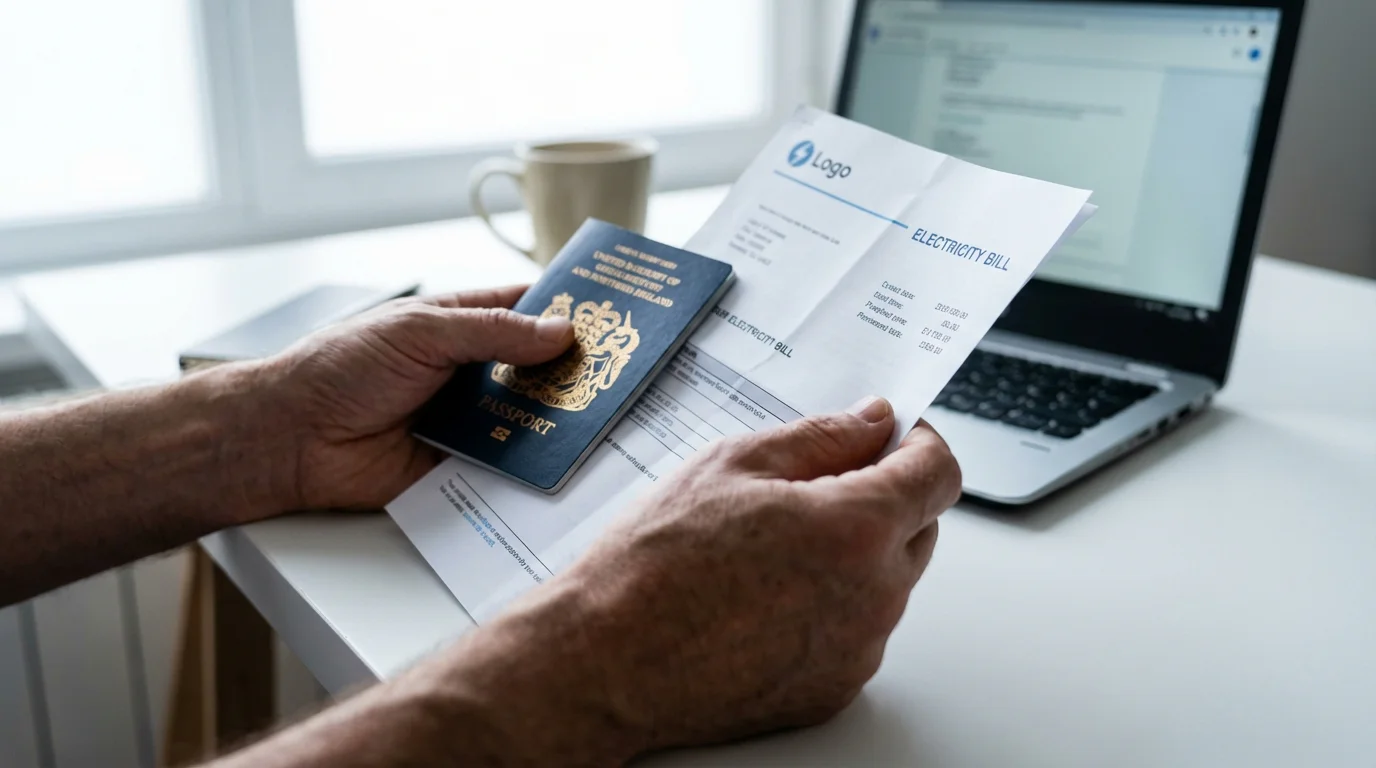
The second stage is document verification, which is triggered when the automated check fails, when you request a withdrawal above a certain threshold, or when your cumulative activity reaches a level that requires enhanced due diligence. At this point, the operator will ask for physical evidence: a government-issued photo ID (passport, driving licence), a proof-of-address document (utility bill, bank statement, council tax letter dated within the last three months), and sometimes a selfie holding your ID for facial matching.
The third stage — source of funds verification — is the most intensive and the most contentious. If your deposits exceed a threshold that triggers a financial risk assessment (the specific amount varies by operator and is not publicly disclosed), you may be asked to provide evidence of where your gambling money comes from. This can mean payslips, bank statements showing salary deposits, tax returns, or documentation of savings, inheritance, or property sales. The purpose is to confirm that gambling activity is funded from legitimate sources and is affordable relative to the player’s income.
Each stage serves a distinct purpose: identity verification prevents underage and fraudulent access, address verification creates a verifiable audit trail, and source of funds checks address both anti-money laundering obligations and the responsible gambling requirement that operators monitor whether customers can afford their level of play.
What Documents You Need
The standard document set for UK gambling KYC is consistent across most operators, though specific requirements vary slightly depending on the site’s verification provider and risk thresholds.
For identity: a valid passport or driving licence (full or provisional). The document must show your photo, full legal name, date of birth, and an expiry date that hasn’t passed. Some operators accept national identity cards issued by EEA countries, but a UK passport or driving licence is the fastest route to approval. Ensure the document image is clear, well-lit, and shows all four corners — rejected uploads are almost always due to poor image quality rather than document issues.
For proof of address: a utility bill (gas, electricity, water, broadband), a bank or building society statement, or a council tax bill, each dated within the last three months. Mobile phone bills are accepted by some operators but rejected by others. Statements must show your full name and current address. Digital statements and screenshots of online banking are generally accepted, provided they display the issuing institution’s letterhead or branding and are legible.
For source of funds (if required): recent payslips showing your employer and salary, bank statements covering the last three months with incoming salary or pension payments highlighted, a P60 or SA302 tax calculation, or documentation of a specific income event such as a property sale, inheritance receipt, or investment redemption. The operator needs to see a plausible connection between your income and your gambling expenditure. Redacting unrelated transactions is usually permitted, provided the key figures — incoming salary, account balance, your name — remain visible.
The verification itself typically takes between one and 72 hours depending on the operator. The variance in that window is largely determined by document quality, how quickly you respond to requests, and whether your submission matches your account details — all factors within your control.
How to Speed Up the Process
The fastest KYC experiences happen when the player front-loads the work. Rather than waiting for the operator to request documents — which often coincides with the moment you’re trying to withdraw a win — upload your ID and proof of address proactively during registration. Most gambling sites include a “Verify Account” or “Document Upload” section in the account settings, and completing it early means your first withdrawal request can be processed without delay.
Image quality is the single most common reason for document rejection. A blurred passport photo, a utility bill with a cropped corner, or a bank statement screenshot that cuts off the date will be sent back for re-upload, adding days to the process. Use good lighting, place the document on a dark flat surface, and photograph the entire page including margins. If you’re submitting a digital PDF, check that the file isn’t corrupted and that all text is legible when zoomed.
Match your details exactly. If your gambling account is registered under “James Smith” but your passport says “James A. Smith,” some automated verification systems will flag a mismatch. The same applies to address formatting — if your account says “Flat 3, 15 High Street” and your utility bill says “15 High Street, Apartment 3,” a manual review may be required. Consistency between your account registration details and your submitted documents is the easiest way to avoid unnecessary back-and-forth.
Respond to verification requests promptly. Operators set deadlines for document submission — typically 30 days — after which your account may be restricted or suspended. Ignoring or delaying a KYC request doesn’t make it go away; it makes your next session start with an account lock instead of a login.
If you’re asked for source of funds documentation, provide more than the minimum. A single payslip covers one month; three months of bank statements demonstrate a pattern. The more context you give the compliance team, the faster they can close the review. Operators don’t enjoy the process any more than players do — a well-documented submission resolves quickly because there’s nothing left to query.
Your Data Rights Under GDPR
UK gambling operators process personal data under the UK General Data Protection Regulation and the Data Protection Act 2018. KYC data — your passport images, utility bills, bank statements, and any source-of-funds documentation — is classified as personal data and is subject to the full protections of the data protection framework.
You have the right to know what data the operator holds about you, why they hold it, who they share it with, and how long they intend to retain it. This information should be set out in the operator’s privacy policy, which is a legal requirement. In practice, KYC documents are typically retained for the duration of your account’s active life plus five years after closure, in line with anti-money laundering record-keeping obligations.
You can request access to your data at any time. Under the UK GDPR’s Subject Access Request provisions, an operator must respond within one calendar month and provide a copy of all personal data they hold about you. You also have the right to request correction of inaccurate data and, in certain circumstances, the deletion of data that is no longer necessary for the purpose it was collected — though anti-money laundering retention periods will often override deletion requests for KYC documents.
If you believe an operator is handling your data improperly — retaining documents beyond the lawful period, sharing data without a legal basis, or failing to respond to a Subject Access Request — you can complain to the Information Commissioner’s Office. KYC is a legal requirement, but the manner in which your data is collected, stored, and used must comply with the same standards that apply to any other UK data controller.
Friction by Design
KYC is annoying. It’s meant to be — in the same way that airport security is meant to be. The friction exists because the alternative is an unverified system where anyone of any age can deposit any amount from any source with no questions asked. That system would be faster, smoother, and catastrophically open to abuse.
The verification process serves the player as much as the regulator. It confirms that your account is uniquely yours, that nobody else can access your balance, and that withdrawals are paid to the verified account holder. If your account were compromised, KYC is the mechanism that prevents a third party from withdrawing your funds — because the operator has already verified who you are and where payments should go.
It also creates a threshold that, while frustrating, provides a natural pause. A player who hits a source-of-funds check is being asked, in effect, “Can you afford this?” The question isn’t always welcome. But in a regulated market that takes responsible gambling seriously, it’s a question worth asking — and one that occasionally prevents real harm.
The best approach to KYC is the boring one: prepare your documents in advance, upload them early, and treat the process as a one-time cost of entry rather than an ongoing burden. Once verified, your account operates without further interruption unless your activity profile changes significantly. The friction is front-loaded, the benefit is permanent, and the alternative — an unverified gambling market — is worse for everyone in it.
