 gamblingwebsitesuk.com
Complete Guide 2026
UK Gambling Websites: Top Rated Betting and Casino Platforms
 Available in US
Licensing, regulation, game types, payments, and responsible gambling tools — everything you need to evaluate UK gambling sites with confidence.

Identifying Legitimate UK Gambling Websites in 2026
The UKGC licence number in a site's footer is the first thing worth checking — and the last thing most players bother with. That six-digit string, cross-referenced against the Gambling Commission's public register, is the dividing line between a gambling site that operates under British law and one that merely looks the part. It determines whether your deposited funds are ring-fenced, whether the games you play are independently audited, and whether you have recourse to a formal complaints process if something goes wrong. Everything else — the welcome bonus, the game library, the app design — is secondary to that single regulatory fact.
This guide covers UK gambling websites as a regulated category, not a marketing label. The phrase means something specific: a platform licensed by the United Kingdom Gambling Commission to offer gambling services to players in Great Britain, subject to the Gambling Act 2005 and its evolving amendments. These sites must comply with anti-money laundering requirements, display responsible gambling tools, segregate customer funds from operating capital, and submit to regular compliance audits. Operators that fail to meet these standards face fines, licence suspensions, or outright revocation — consequences that offshore alternatives simply do not face, because no equivalent enforcement mechanism exists outside the UKGC's jurisdiction.
The distinction matters more than it used to. With online gross gambling yield in Britain reaching £7.8 billion for the year to March 2025 and the regulatory landscape shifting faster than at any point since the Act's passage, the gap between UKGC-licensed platforms and unregulated competitors has widened considerably. New wagering caps, mandatory deposit limits, and stake restrictions for online slots have all taken effect or been scheduled within the past twelve months. Players who understand these protections — and what they cost operators — are better equipped to evaluate the sites competing for their custom.
What follows is a comprehensive walkthrough of how UK gambling websites work: the licensing regime behind them, the types of gambling they offer, how to assess quality, what the latest rules mean for bonuses and payments, and where the system's strengths and weaknesses lie. The tone is technical where it needs to be, practical everywhere else, and not particularly interested in telling you which site to choose. That part is your job. This guide makes sure you know what you're choosing between.
What "UKGC-licensed" actually means
A UK Gambling Commission licence confirms that an operator has passed identity and financial background checks, demonstrated adequate player protection measures, implemented anti-money laundering controls, and agreed to ongoing regulatory oversight. All key management personnel hold individual Personal Management Licences. The operator's games must be tested by approved testing houses, and customer funds must be held separately from business accounts. The licence is not a one-off approval — it is a continuing obligation, reviewed and enforced by the Commission on a rolling basis.
The UK Gambling Landscape in 2026
Britain's relationship with gambling is older than its parliament — and considerably more profitable. The industry generated a total gross gambling yield of £16.8 billion in the financial year ending March 2025, a 7.3 per cent increase on the previous year. Of that figure, online casino, betting and bingo accounted for £7.8 billion — a 13.1 per cent rise that underscored the accelerating shift from high street to screen. The land-based sector, comprising betting shops, casinos, arcades and bingo halls, contributed £4.8 billion, while lotteries made up the remaining £4.2 billion. These are not niche numbers. The UK gambling market is one of the largest regulated markets in the world, and its regulatory framework is the template that several other jurisdictions have adopted or aspired to replicate.
UKGC (UK Gambling Commission) — the non-departmental public body established under the Gambling Act 2005 to regulate commercial gambling in Great Britain. It issues operating and personal licences, sets the conditions operators must meet, enforces compliance, and advises the government on gambling policy. Its jurisdiction covers England, Scotland and Wales; Northern Ireland is regulated separately.
How the Gambling Act 2005 Shaped Today's Market
Before the Gambling Act 2005 came into force in September 2007, British gambling law was a patchwork of statutes stretching back to the Betting, Gaming and Lotteries Act 1963 and the Gaming Act 1968. Online gambling existed in a legal grey area — technically not prohibited, but not properly regulated either. The 2005 Act replaced this fragmented system with a single legislative framework built around three licensing objectives: keeping gambling fair and open, preventing gambling from being a source of crime or disorder, and protecting children and other vulnerable people from being harmed by gambling.
The Act created the Gambling Commission as the sole regulator for commercial gambling in Great Britain, replacing the Gaming Board. It introduced a tiered licensing system covering operating licences for businesses, personal management licences for key individuals, and premises licences for physical locations. Crucially, it established the principle that any operator offering gambling services to British consumers — regardless of where the operator is based — must hold a UKGC licence. This "point of consumption" rule, strengthened by the Gambling (Licensing and Advertising) Act 2014, closed the loophole that had allowed offshore operators to target UK players without regulatory oversight.
The framework was forward-thinking for its era. It anticipated the growth of remote gambling and built in powers for the Commission to adapt its codes of practice without requiring fresh primary legislation. That flexibility has proved essential, because the gambling landscape of 2026 bears little resemblance to the one the Act's authors imagined.

Key Regulatory Changes in 2025–2026
The past eighteen months have seen more substantive rule changes than any equivalent period since the Act's implementation. The most visible to players was the introduction of online slot stake limits on 21 May 2025: a maximum of £5 per spin for players aged 25 and over, and £2 per spin for those aged 18 to 24. The age-tiered structure was a first for UK gambling regulation and reflected evidence that younger adults face disproportionate risk of gambling harm.
On 19 January 2026, the UKGC's revised Social Responsibility Code 5.1.1 took effect, capping bonus wagering requirements at ten times the bonus value and banning cross-product promotions — meaning an operator can no longer offer a sports betting incentive that requires casino play to unlock. The rule ended a long-standing practice where players accepted bonuses with 35x or 50x wagering obligations that were, in practical terms, mathematically unachievable.
Mandatory deposit limits represent the next milestone. From 31 October 2025, operators have been required to prompt new customers to set a financial limit before their first deposit, make limit-setting controls visible on homepages and deposit pages, and provide bi-annual spending summaries. By 30 June 2026, all online operators must offer a deposit-only limit — calculated purely on the amount paid into an account, excluding withdrawals — as a standard feature. The Commission has also continued to tighten financial risk check requirements, building on the affordability assessment framework introduced in the wake of the 2023 White Paper.
How UKGC Licensing Works
Getting a UKGC licence is deliberately difficult — that's the entire point. The Commission's licensing process is designed to filter out operators who lack the financial resources, technical infrastructure, or regulatory commitment to run a compliant gambling business. Understanding what operators go through to obtain and maintain a licence helps explain both the cost structure of UK gambling sites and the protections players receive in return.
The process begins with an application that typically takes around 16 weeks to assess. Operators must submit detailed documentation including corporate structure and beneficial ownership charts, business plans with three-year financial projections, bank statements for the previous six months, proof of funding, anti-money laundering policies, responsible gambling procedures, customer terms and conditions, rules of play for every game offered, and technical system diagrams showing end-to-end operations. Remote operators — those offering services online — must additionally provide details of their software supply chain, data hosting arrangements, and system security architecture.
Every person in a key management role within the business must also apply for a Personal Management Licence. This covers directors, the chief executive, the head of finance, the head of compliance, and the marketing director at a minimum. Each individual undergoes personal background checks including criminal record searches, financial integrity assessments, and professional reference verification. If any key person fails the fit-and-proper test, the operating licence application stalls or is refused.
Once licensed, the obligations do not relax. Operators must submit quarterly regulatory returns, maintain ongoing compliance with the Licence Conditions and Codes of Practice, report key events to the Commission, ensure all games are tested by approved testing houses, segregate customer funds from operational accounts, and participate in an approved Alternative Dispute Resolution scheme. The Commission conducts compliance assessments — both desk-based and on-site — and has the power to impose financial penalties, attach conditions to licences, suspend operations, or revoke licences entirely. Recent enforcement has included seven-figure fines for anti-money laundering failures and customer interaction deficiencies.
UKGC Licence Fee Structure — by Gross Gambling Yield
| Annual GGY Band | Application Fee | Annual Fee |
|---|---|---|
| Under £550,000 | £4,224 | £4,199 |
| £550,000 – £1.5m | Tiered upward | Tiered upward |
| Over £1 billion | £91,686 | £793,729+ |
On top of licence fees, remote operators pay Remote Gaming Duty at 21% of GGY and a statutory levy of 1.1% of GGY (introduced April 2025) to fund gambling harm research, education and treatment. The government is currently consulting on a proposed 30% increase to licence fees to cover rising regulatory costs, with changes potentially taking effect in October 2026.
The fee structure is tiered by revenue, which means smaller operators pay proportionally less — but the baseline cost of entry remains substantial. A startup with no revenue still pays over £4,000 to apply, plus the cost of personal licence applications, legal advice, compliance systems, RNG certification, and the technical infrastructure to meet UKGC standards. This financial barrier is intentional. It ensures that only operators with genuine backing and long-term business plans enter the market, which in turn provides a baseline level of assurance to players.
Types of Gambling Available on UK Sites
The phrase "gambling site" covers everything from a Premier League accumulator to a penny slot — and the experience at each end is nothing alike. UK-licensed platforms tend to specialise or, increasingly, to offer multiple verticals under a single brand. Understanding the categories helps you evaluate whether a site's strengths align with how you actually want to use it.
Casino Games: Slots, Table Games, Live Dealer
Online casino is the largest revenue segment of the UK gambling market, generating over £5 billion in gross gambling yield for the year to March 2025. Within that, slots dominate — £4.2 billion of casino GGY came from slot games alone. The typical UKGC-licensed casino offers hundreds or thousands of slots spanning classic three-reel games, five-reel video slots, Megaways titles with variable payline structures, and progressive jackpot games where prize pools accumulate across the network.
Table games include digital versions of blackjack, roulette, baccarat, and various poker formats. These games run on random number generators tested by approved laboratories and typically offer lower house edges than slots — blackjack with basic strategy sits around 0.5 per cent, European roulette at 2.7 per cent. Live dealer games bridge the gap between digital and physical, streaming real dealers from studios in real time via platforms built primarily by Evolution, Playtech, and Pragmatic Play. Live casino has become a significant growth category, offering games like Lightning Roulette, Crazy Time, and unlimited-seat blackjack variants that have no physical-world equivalent.

Sports Betting and Exchange Markets
Sports betting is the second pillar of UK online gambling, with football and horse racing accounting for the majority of turnover. UK bookmakers offer pre-match and in-play markets across dozens of sports, from the obvious — Premier League, Champions League, Grand National — to niche verticals like darts, snooker, and eSports. In-play betting, where odds adjust in real time as events unfold, now represents a substantial share of total betting volume and has driven the development of bet-builder tools that let customers construct multi-leg bets within a single match.
Exchange betting, pioneered by Betfair, operates on a fundamentally different model. Rather than betting against the bookmaker, players bet against each other, with the exchange taking a commission on winning bets. This allows users to both back and lay outcomes — effectively acting as their own bookmaker on the lay side. Exchange markets typically offer better odds than traditional bookmakers because the margin is lower, but liquidity can be thin on less popular events.
Poker, Bingo and Specialty Games
Online poker in the UK operates through dedicated rooms or integrated poker sections within larger platforms. Cash games and tournament formats are available across Texas Hold'em, Omaha, and other variants, with player pools ranging from small-stakes recreational tables to higher-limit games. The UK poker market is smaller than its peak in the mid-2000s, but it remains active, with operators like PokerStars and 888poker maintaining licensed UK-facing client software.
Bingo has a loyal following in Britain, and the online version replicates the social element through chat rooms alongside 75-ball and 90-ball game formats. Sites like Tombola and Mecca Bingo have built significant online presences. Specialty games round out the offering: scratch cards, virtual sports (animated events with RNG outcomes), slingo (a slot-bingo hybrid), and lottery-style number games. These categories individually generate less revenue than casino or betting, but they broaden a site's appeal and serve players who want lower-intensity gambling options.
Casino
Slots, table games, live dealer. Largest UK online vertical by GGY. House edge varies from under 1% (blackjack) to 3–6% (slots).
Sports Betting
Pre-match and in-play markets. Football and horse racing dominate. Bet builders and cash-out features now standard.
Betting Exchanges
Peer-to-peer wagering. Back and lay markets. Lower margins, but liquidity varies. Betfair is the dominant UK platform.
Poker
Cash games and tournaments. Texas Hold'em and Omaha. Separate player pools by operator. Skill-weighted play.
Bingo
75-ball and 90-ball formats. Social chat rooms. Tombola, Mecca Bingo lead the UK market. Low-stakes entry points.
Specialty
Scratch cards, virtual sports, slingo, lottery-style games. Lower-intensity gambling with simpler mechanics.
What to Look For in a UK Gambling Site
Bonuses get the headlines. Infrastructure keeps your money safe. Evaluating a UK gambling site requires looking past the welcome offer and examining the structural elements that determine whether the platform is competent, trustworthy, and suited to your preferences. The criteria below apply regardless of whether you are primarily interested in casino games, sports betting, or any other vertical.
Licensing and Trust Signals
Start with the licence. Every UKGC-licensed site must display its licence number, typically in the footer. Copy that number and check it against the Commission's public register. Verify that the operator name listed on the register matches the brand you are using — many operators run multiple brands under a single licence. The register also shows the activities the licence covers, any regulatory actions taken, and the current licence status. If the licence number is absent, invalid, or does not match, stop there.
Beyond the licence, look for indicators of operational maturity: membership of an approved ADR (Alternative Dispute Resolution) scheme such as IBAS or eCOGRA, visible responsible gambling tools, clear terms and conditions, and a transparent privacy policy. These elements are not decorative — they are regulatory requirements, and their quality of implementation varies between operators. A site that buries its responsible gambling tools three clicks deep is technically compliant but practically unhelpful.
Game Selection and Software Quality
The breadth of a site's game library matters less than its depth and provenance. A casino offering 3,000 slots from twenty providers is not automatically better than one offering 800 from five. What matters is whether the providers are reputable — names like Evolution, Playtech, NetEnt, Pragmatic Play, Microgaming, and Red Tiger carry weight because their games are independently tested, their RTPs are published, and their track record is long enough to have been scrutinised. For sports betting, the quality of odds, the range of markets, and the reliability of in-play pricing are more useful indicators than sheer market count.
Software quality also manifests in the user experience: page load times, search and filtering tools, mobile responsiveness, and the stability of live dealer streams. These are harder to quantify than a game count, but they determine how the site actually feels to use day-to-day. If the interface is sluggish or confusing, the game library is irrelevant.
Payment Speed and Methods
How quickly a site processes withdrawals tells you more about its operational priorities than almost any other metric. UKGC rules require that operators do not impose unreasonable delays on withdrawals and that they process requests within a reasonable timeframe. In practice, e-wallet withdrawals (PayPal, Skrill, Neteller) tend to arrive within 24 hours; debit card withdrawals take one to three business days; bank transfers can take up to five. Some operators have built their competitive positioning around speed, offering same-day payouts as standard.
Check which payment methods are supported before you deposit. UKGC sites accept Visa and Mastercard debit cards (credit cards are banned for gambling), various e-wallets, bank transfers, and in some cases Apple Pay, Google Pay, or prepaid options like Paysafecard. Minimum deposit and withdrawal thresholds vary. Fees should be clearly disclosed — most reputable sites do not charge for deposits, but some apply fees to certain withdrawal methods.
Do
- Verify the UKGC licence number on the public register before depositing.
- Test withdrawal speed with a small initial deposit and cashout.
- Read the full terms on any bonus before opting in.
- Set deposit and session limits from day one.
- Check which ADR scheme the site uses and bookmark the complaints process.
Don't
- Assume a site is licensed because it looks professional or advertises on TV.
- Chase a welcome bonus without checking wagering requirements and game weightings.
- Ignore slow withdrawal processing — it's a signal, not a quirk.
- Skip the responsible gambling setup because you think you don't need it.
- Deposit more than you can afford to lose in a single session.
You know how to evaluate the platform. Now for the part that clouds most players' judgement — the bonus.
Bonuses, Promotions and the New UKGC Rules
The 2026 wagering cap didn't kill casino bonuses — it made them honest. For years, the UK gambling bonus market operated on a model where operators offered headline-grabbing matched deposits with wagering requirements so steep that most players would never convert the bonus into withdrawable cash. A £50 bonus with 40x wagering meant placing £2,000 in bets before a single penny could be cashed out. The house edge alone would typically consume the bonus well before that threshold was reached. It looked generous. It wasn't.
That dynamic changed on 19 January 2026, when the UKGC's revised Social Responsibility Code 5.1.1 took effect. The new rules imposed two structural changes that reshaped the entire promotional landscape across licensed UK gambling sites.

How Wagering Requirements Work Under the 10x Cap
Under the new framework, no bonus offered by a UKGC-licensed operator can carry wagering requirements exceeding ten times the bonus value. A £20 bonus can require at most £200 in total wagers before winnings become withdrawable. This applies to matched deposits, free spins, free bets, and every other promotional format. The rule has no exceptions and no grandfathering — all existing offers had to be restructured by the implementation date.
Bonus Value Calculator
Turn a headline bonus into its real expected value — after wagering, weighting & RTP.
A "£100 bonus" isn't £100. What it's really worth depends on the wagering requirement, the game weighting, and the game's RTP. Since January 2026, UK wagering is capped at 10× — but game weighting can quietly push the effective requirement far higher. Enter the terms to see what you'd actually keep.
The practical effect is significant. At 10x wagering on a slot with a 96 per cent RTP, the expected cost of clearing a £20 bonus is roughly £8 in theoretical losses — meaning the bonus retains real value for the player. At the old industry average of 35x, that figure was closer to £28, wiping out the bonus entirely in expected terms. The maths shifted from theoretical loss to theoretical gain, which is exactly why some operators have responded by offering smaller headline bonuses with tighter maximum win caps.
The January 2026 wagering cap also banned cross-product promotions. An operator can no longer offer a sports betting bonus that requires casino play to unlock, or bundle bingo and slots within a single incentive. Each promotion must apply to one gambling product only. This prevents a tactic where operators used familiar, lower-risk products as entry points to funnel players toward higher-margin games.
There is a caveat worth noting. The 10x cap applies to the stated wagering requirement, but game weighting is not currently regulated. If an operator assigns 25 per cent contribution to slots — meaning every £1 wagered counts as only £0.25 toward the requirement — the effective wagering becomes 40x. The UKGC's consultation response did not address this gap, so players still need to check the fine print on game contribution rates.
Welcome Offers vs Ongoing Promotions
Welcome offers target new customers and typically take the form of a matched deposit (the operator matches your first deposit up to a specified amount) or a package of free spins. Under the new rules, these offers are simpler and their real value is easier to calculate. Expect smaller headline numbers — a £20 bonus at 10x wagering is genuinely more valuable than a £100 bonus at 50x — but be aware of ancillary terms including minimum deposit thresholds, maximum bet limits while wagering, time limits for clearing requirements, and maximum win caps.
Ongoing promotions — reload bonuses, cashback offers, loyalty points, odds boosts — are where operators differentiate after the initial signup. These are less regulated in terms of structure (they still fall under the 10x cap where wagering applies) and vary widely in genuine value. Cashback on net losses and odds boosts on sports markets tend to be the most transparent, because the benefit is immediate and unconditional. Loyalty programmes that require sustained high-volume play to reach meaningful reward tiers are, by design, better suited to high-frequency players.
Responsible Gambling: Tools and Your Rights
No gambling site should make it difficult to stop. That principle underpins every responsible gambling requirement the UKGC imposes on licensed operators, and it is the area where regulation has moved fastest in recent years. The tools described below are not optional extras that good operators choose to offer — they are mandatory conditions attached to every operating licence, and failure to implement them properly results in enforcement action.
Deposit Limits, Time-Outs and Self-Exclusion
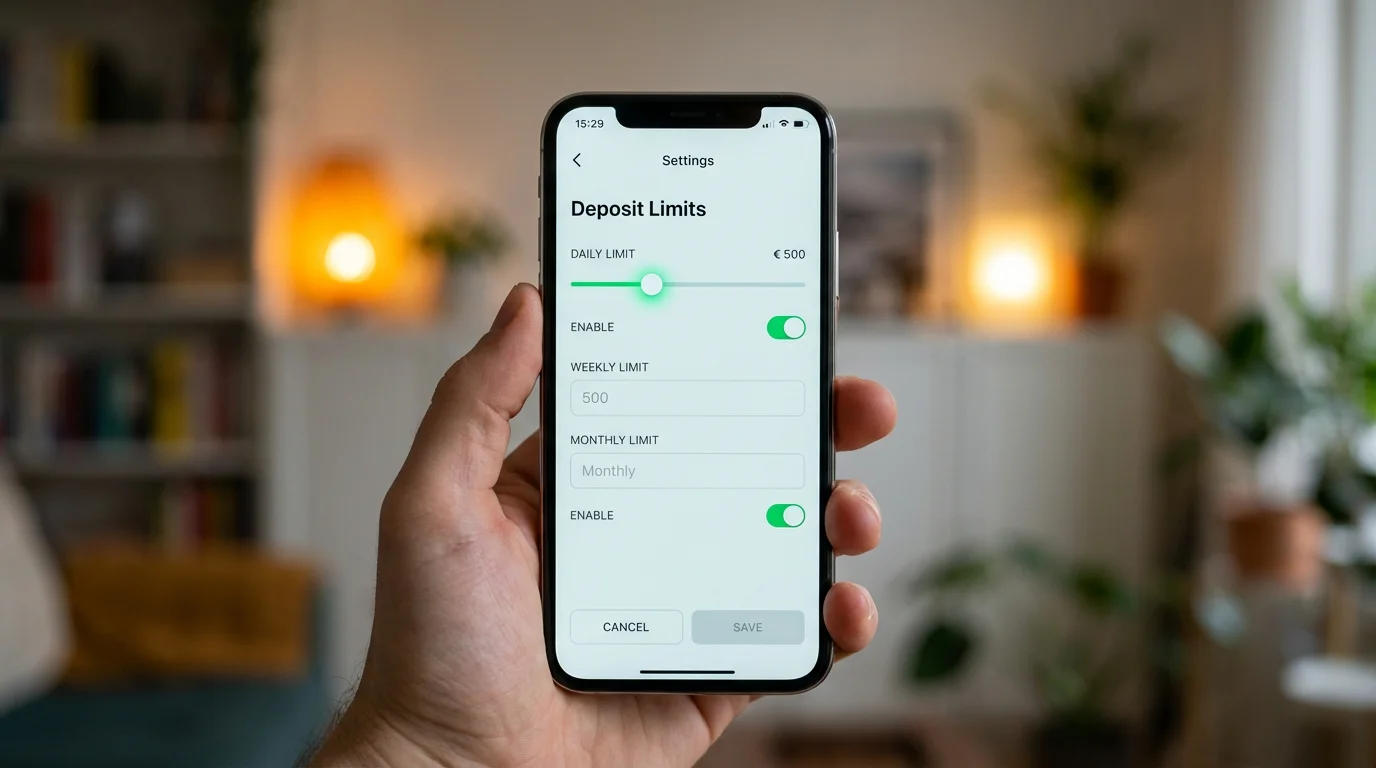
Every UKGC-licensed gambling site must allow players to set deposit limits — daily, weekly, or monthly caps on how much money can be added to an account. Since 31 October 2025, operators have been required to prompt new customers to set a financial limit before their first deposit, and to make limit-setting controls visible on both the homepage and the deposit page. From 30 June 2026, all online operators must offer a standardised deposit-only limit based purely on the amount paid into the account, with no netting off of withdrawals. Decreasing a limit takes effect immediately; increasing one is subject to a cooling-off period, typically 24 hours.
Time-out functions let players take a break from gambling for a defined period — usually 24 hours, 48 hours, seven days, or 30 days. During a time-out, the account is inaccessible and the operator must not send marketing communications. Self-exclusion goes further: players can close their account for a minimum of six months, during which the operator must remove them from all marketing databases, close any open bets (returning stakes where possible), and block any attempt to reopen the account.
How GamStop Works
GamStop is the UK's national online self-exclusion scheme, operated independently of individual gambling sites. By registering at gamstop.co.uk, a player can self-exclude from all UKGC-licensed online gambling sites simultaneously, for a minimum period of six months, one year, or five years. All licensed online operators are required to participate in GamStop, and registration is free.
Once active, a GamStop registration prevents the player from opening new accounts, accessing existing accounts, or receiving marketing from any participating operator. The system is not perfect — it does not cover land-based gambling venues or unlicensed offshore sites, and there have been documented cases of operators failing to enforce exclusions promptly. But it remains the most comprehensive multi-operator self-exclusion tool available in any regulated gambling market, and it provides a significant friction barrier for players seeking to control their gambling behaviour.
Financial Risk Checks and Affordability
Affordability checks are the most controversial element of the UKGC's post-White Paper reform agenda. The concept is straightforward: operators should identify customers who may be spending beyond their means and intervene before significant financial harm occurs. The implementation is where things get complicated. Light-touch checks — triggered by spending patterns or losses crossing certain thresholds — use publicly available financial data and credit reference information. Enhanced checks, triggered at higher thresholds, may require customers to provide documentation such as payslips or bank statements.
The industry has pushed back on the intrusiveness argument, and the UKGC has refined its approach since the initial proposals. The current framework focuses on proportionality — the depth of the check should match the level of risk indicated by the customer's spending. Players who gamble within modest limits are unlikely to encounter anything beyond basic automated screening. Those who escalate rapidly or hit sustained high-spend patterns may face additional verification. It is friction by design, and the debate over where to draw the line between player protection and personal autonomy is far from settled.
Every UKGC-licensed gambling site must offer deposit limits, time-outs, self-exclusion, and access to GamStop. These are not gestures of goodwill — they are licence conditions. If a site makes any of these tools difficult to find, slow to activate, or conditional on contacting support, that is a compliance failure worth reporting to the Commission.
Payments: Getting Money In and Out
The deposit is instant. The withdrawal is where the testing begins. That asymmetry — deliberate or structural — defines the payment experience on UK gambling sites, and it is the single most common source of player frustration. Understanding the mechanics helps set realistic expectations and identify operators that genuinely prioritise fast payouts.
Accepted Methods: Debit Cards, E-Wallets, Bank Transfers
Visa and Mastercard debit cards are the default payment method on virtually every UK-licensed site. Deposits are processed instantly; withdrawals typically take one to three business days, though some operators have reduced this to same-day for verified accounts. Debit cards have the advantage of universality — almost every UK adult has one — but they are not the fastest withdrawal route.
E-wallets offer the best balance of speed and convenience. PayPal is the most widely accepted, followed by Skrill and Neteller. Deposits are instant, and withdrawals generally arrive within 24 hours, often within a few hours on sites that prioritise payout speed. Apple Pay and Google Pay are available for deposits on an increasing number of platforms, though withdrawal support for these methods is less consistent — cashouts may be routed to the underlying card instead.
Bank transfers are the slowest option, typically taking three to five business days for withdrawals, but they accommodate larger transactions and may be preferred by players who do not want to link e-wallet accounts to gambling sites. Prepaid options like Paysafecard are available for deposits on many sites but generally cannot be used for withdrawals, requiring an alternative cashout method.
Some UK operators now process e-wallet withdrawals in under two hours as a verified standard, not a marketing claim. The fastest payout benchmarks in the market have compressed dramatically since the UKGC tightened its guidance on unreasonable withdrawal delays.
Why Credit Cards Are Banned
Since 14 April 2020, it has been illegal for UK-licensed gambling operators to accept credit card deposits. The ban was introduced by the UKGC after evidence showed that 22 per cent of online gamblers using credit cards were classified as problem gamblers — a rate significantly higher than among those using other payment methods. The rationale was direct: allowing people to gamble with borrowed money that accrues interest amplifies the financial harm associated with losses.
The ban applies to all forms of credit card, including Visa Credit and Mastercard Credit, across all UKGC-licensed platforms. It does not extend to debit cards, e-wallets funded by debit cards, or bank transfers. Operators must have systems in place to identify and reject credit card transactions at the point of deposit. The rule was one of the first major consumer protection measures implemented ahead of the broader reform agenda triggered by the 2023 White Paper, and it has since been cited as a model by regulators in other jurisdictions considering similar restrictions.
Mobile Gambling in the UK
The browser version usually does everything the app does — minus the storage space. That is the practical reality of mobile gambling in the UK, and it is worth stating plainly because operators invest considerable effort in driving app downloads, even when the mobile website offers an identical feature set. The majority of online gambling sessions in the UK now take place on mobile devices, and the platforms have adapted accordingly: responsive design, touch-optimised interfaces, and streamlined navigation are standard rather than exceptional.
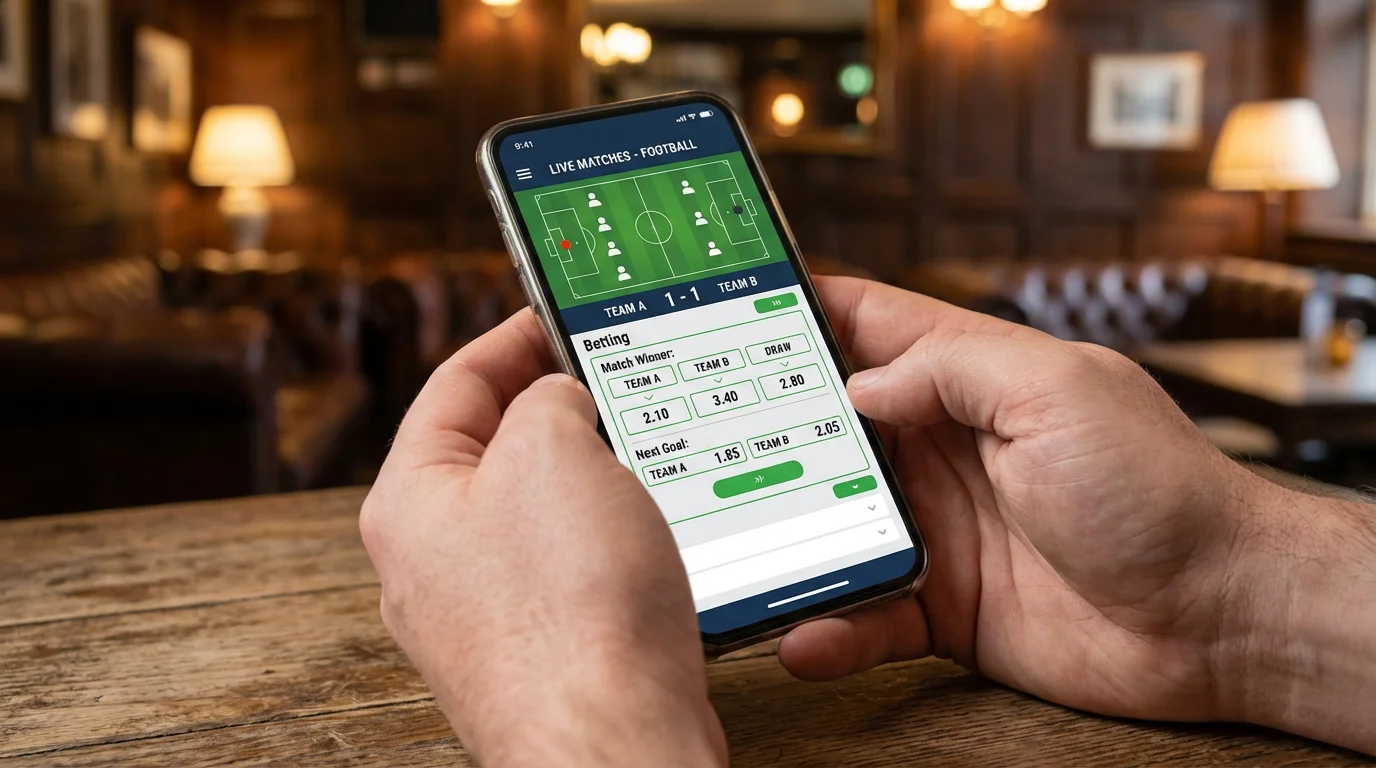
Native apps, available through the App Store and Google Play, do offer some advantages. Push notifications for bet settlement and promotions, biometric login, and marginally faster load times are the main differentiators. Apple's app review process and Google's updated gambling app policies both require UK gambling apps to hold valid UKGC licences, which adds a layer of platform-level verification. However, not every UKGC-licensed operator maintains native apps — smaller operators and newer entrants often rely entirely on mobile-optimised websites, which function as progressive web apps that can be added to the home screen without a formal download.
What matters more than the delivery mechanism is the quality of the mobile experience. Does the site load quickly on a standard connection? Can you access responsible gambling tools — deposit limits, time-outs, self-exclusion — from the mobile interface as easily as from desktop? Are live dealer streams stable? Is the bet placement process on in-play markets fast enough to keep up with live odds movement? These questions apply equally to apps and browser versions. A polished app that buries its limit-setting tools is worse than a basic mobile site that puts them on the first screen.
One consideration specific to mobile: data usage. Live casino streaming and in-play sports betting with live visuals consume significant bandwidth. On a metered connection, a long live dealer session can eat through mobile data faster than expected. Most operators offer data-saving modes or lower-resolution streaming options, but these are not always prominently surfaced.
How UK Gambling Sites Compare to Offshore Alternatives
Offshore sites offer freedom. UKGC sites offer a safety net. The trade-off is real, and pretending otherwise does not serve anyone trying to make an informed decision. Unlicensed gambling platforms — typically based in jurisdictions like Curaçao, Anjouan, or sometimes operating without any licence at all — advertise to UK players through social media, affiliate networks, and word of mouth. They exist because some players find UKGC protections restrictive, and because enforcement against offshore operators targeting British consumers is difficult.
The appeal of offshore sites is not mysterious. They often accept cryptocurrency, impose no deposit limits or affordability checks, offer higher maximum stakes, provide more aggressive bonus structures (though with wagering requirements that dwarf the UKGC's new 10x cap), and do not participate in GamStop. For players who have self-excluded from UKGC-licensed sites, offshore platforms represent a path around that barrier — which is precisely the kind of harm the self-exclusion system was designed to prevent.
What offshore sites lack is everything that makes UKGC licensing worth the cost of entry. There is no requirement for customer fund segregation — if the operator goes bankrupt, your balance may disappear with it. There is no access to an approved ADR scheme for dispute resolution. Games may not be independently tested for fairness. There is no obligation to display or enforce responsible gambling tools. Withdrawal delays, arbitrary account closures, and confiscated winnings are reported far more frequently on unlicensed platforms, and the player's recourse in those situations is effectively zero. You cannot complain to a regulator that does not regulate the site.
Using an unlicensed gambling site is not illegal for UK players — the legal burden falls on the operator, not the customer. But it means forfeiting every consumer protection that UK regulation provides. If something goes wrong, there is no complaints process, no ombudsman, and no public register to consult. The decision to use an offshore platform is a calculated acceptance of those risks.
The UKGC has increasingly focused on disrupting unlicensed operators targeting UK consumers, issuing cease-and-desist notices, working with payment processors to block transactions, and coordinating with international enforcement bodies. The government's proposed licence fee increase includes ring-fenced funding specifically for black market disruption. But the internet is a difficult border to police, and as long as regulated requirements create friction, some players will seek alternatives. The question is whether the protections are worth the friction. For most players, the answer is straightforward.
FAQ
How do I verify that a UK gambling site is properly licensed?
Look for the licence number in the site's footer — it should be displayed alongside the Gambling Commission logo. Copy the number and search it on the UKGC public register. The register will show the licence holder's legal name, the activities the licence covers, its current status, and any regulatory actions on record. Verify that the operator name on the register matches the brand you are using, since many companies operate multiple sites under a single licence. If the licence number is missing, returns no results, or shows a suspended or revoked status, do not deposit. You can also report unlicensed sites to the Gambling Commission directly through their website.
Are my winnings from UK gambling sites taxed?
No. Gambling winnings in the United Kingdom are tax-free for players, regardless of the amount or frequency. This applies to all forms of gambling — casino games, sports betting, poker, bingo, and lottery prizes. The tax burden falls on the operator, not the customer. Licensed operators pay Remote Gaming Duty at 21 per cent of gross gambling yield for online casino and gaming products, and Remote Betting Duty at 15 per cent for online betting. These operator-level taxes are the reason winnings reach players untaxed. The only exception concerns professional gamblers whose gambling constitutes a taxable trade, but HMRC has historically interpreted this very narrowly, and the vast majority of recreational players have no tax liability on their winnings.
What responsible gambling tools must UKGC-licensed sites provide?
Every UKGC-licensed gambling site is required to offer a suite of responsible gambling tools as a condition of its licence. These include deposit limits (daily, weekly, or monthly), session time limits, reality check notifications that alert players to how long they have been playing, time-out periods (temporary account suspension ranging from 24 hours to 30 days), and self-exclusion for a minimum of six months. All licensed online operators must also participate in GamStop, the national self-exclusion scheme that allows players to block themselves from every UKGC-licensed site at once. Operators are additionally required to provide links to support organisations such as GamCare and the National Gambling Helpline (0808 8020 133). From June 2026, all sites must also offer a standardised deposit-only limit as a default option.
The Odds You Actually Control
The best edge a player has isn't a bonus code — it's knowing when the session should end. That is not a slogan; it is the one piece of strategic advice that applies across every vertical, every platform, and every game type covered in this guide. The house edge is built into every product on every licensed site, and no amount of research into RTP percentages, wagering requirements, or payment speeds changes that structural fact. What you can control is how you engage with it.
Set a budget before you open the site. Use the deposit limit tool — it exists because people consistently overestimate their own discipline, and the data supports that claim. Treat gambling as an entertainment expense with a defined ceiling, not as a financial strategy with upside potential. If a session stops being enjoyable, close it. If you find yourself returning to recover losses, that is not a strategy — it is a pattern, and GamStop exists for exactly that moment.
UK gambling regulation is imperfect, sometimes intrusive, and perpetually playing catch-up with the industry it oversees. It is also, by any reasonable international comparison, among the most comprehensive player protection frameworks in existence. The reforms of 2025 and 2026 — stake limits, wagering caps, mandatory deposit limits, tightened affordability checks — represent a regulatory philosophy that has shifted decisively from trust-the-operator to protect-the-player. Whether that shift has gone far enough, or too far, depends on whom you ask. But the tools are there, the rights are codified, and the enforcement has teeth. The rest is up to you.
